Anchor points are the foundation of any rope access and fall-arrest system. If they fail, every safety measure fails with them. Rope Access 360 was appointed to conduct professional Anchor Point Testing Cape Town at ABSA Bridge City to assess the integrity of existing safety infrastructure and identify compliance risks.
For large commercial properties, Anchor Point Testing is a critical safety requirement that protects workers, contractors, and property owners from preventable risk and liability.
Did you know?
IWH standards require anchor points to be tested and certified at regular intervals. Neglecting this can void safety compliance.
-

- Close inspection of anchor hardware during Anchor Point Testing procedures.
-
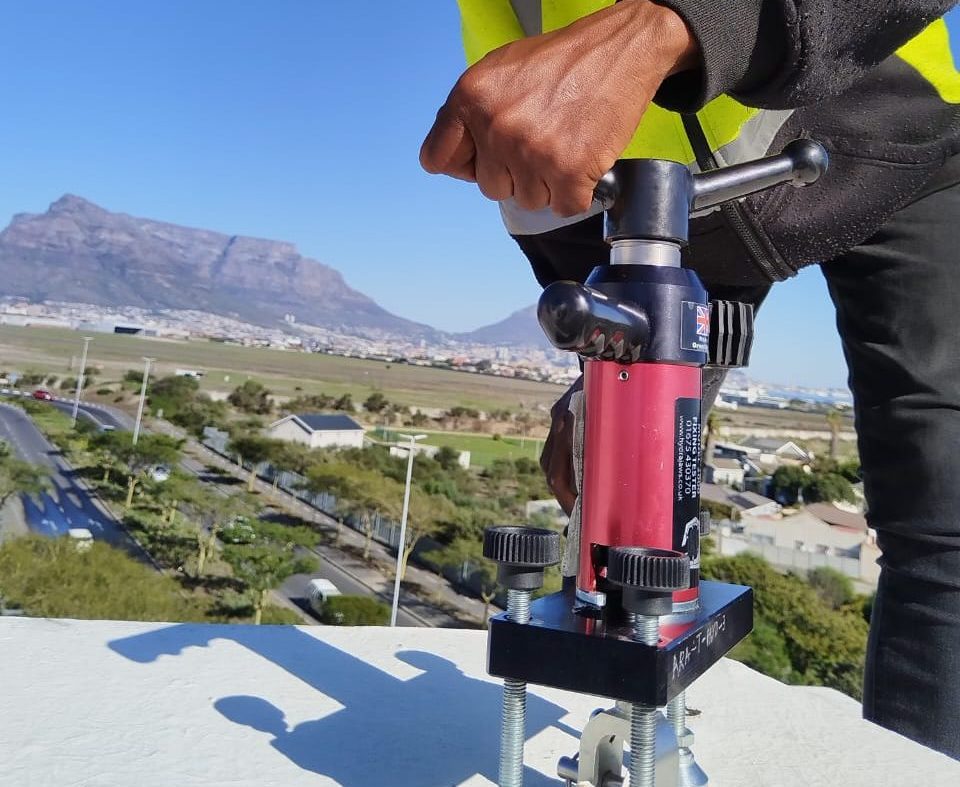
- Load-testing equipment used during professional Anchor Point Testing at ABSA Bridge City, Durban.
Anchor Point Testing & Remedial Safety Upgrades
This project focused on restoring full compliance and structural reliability to the building’s fall-protection system through three core work areas:
Non-compliant hardware was replaced and missing eye nuts were installed to reinforce the building’s fall-protection system.
The team installed compliant eye nuts and replaced compromised components to restore full system reliability.
Final Anchor Point Testing confirmed all anchors met load-bearing standards and were safe for continued rope access operations.
Project Gallery From Anchor Point Testing Cape Town


If your anchor system hasn’t been tested in the last year, book a FREE Rope Access 360 inspection today
Our Step-by-Step Process for Anchor Point Testing Cape Town
Step 1: Inspection & Load Testing
Our technicians performed systematic Anchor Point Testing using calibrated load-testing equipment to measure structural integrity and anchor reliability. Each point was examined for corrosion, fatigue, improper installation, and missing safety components. This stage ensured potential risks were identified before technicians relied on the system for high-access work.
Step 2: Risk Identification & Remedial Planning
Testing results revealed missing eye nuts and weakened fixings that compromised safety compliance. These defects presented serious risks to technicians working at height. A targeted remedial plan was developed to restore anchor strength and ensure regulatory alignment.
Step 3: Installation of Compliant Safety Hardware
Our rope access specialists installed certified eye nuts and reinforced compromised anchors using approved installation methods suited to the building structure. All replacement components were selected for durability and compliance, ensuring anchors could withstand operational loads during rope access and fall-arrest activities.
Step 4: Final Verification & Compliance Confirmation
A second round of Anchor Point Testing verified the integrity of all installations. Each anchor was re-tested to confirm load-bearing performance and system stability. This process ensured the entire anchor network was compliant, secure, and ready for ongoing maintenance operations with documented safety assurance.
Certified Anchor System & Improved Site Safety
This Anchor Point Testing Cape Town project at ABSA Bridge City restored confidence in the building’s entire fall-protection infrastructure. Within two working days, Rope Access 360 reinforced critical anchor points, corrected safety deficiencies, and ensured every tested location could safely support ongoing high-access maintenance.
Importantly, the work was completed without interrupting normal building operations. Rope access methods allowed our technicians to reach difficult areas efficiently, avoiding scaffolding delays and minimizing disruption to tenants and facility activities. This approach ensured safety improvements were implemented quickly and cost-effectively.
Did you know?
According to South Africa’s Construction Regulations:
“A contractor must… ensure that no person works in a fall risk position, unless such work is performed safely…”
Industry inspections consistently show that anchor systems degrade over time when not regularly tested.
Without corrective action, these defects create serious risks for contractors, maintenance teams, and property owners.
At ABSA Bridge City, we identified weaknesses and resolved them immediately. Missing eye nuts were installed, compromised connections were reinforced, and critical safety points were restored to reliable working condition. Rather than isolated repairs, the building received a fully integrated solution — tested, upgraded, and verified as a complete system.
The result is a compliant anchor network ready for continued rope access operations, reduced liability exposure for property stakeholders, and safer conditions for every technician working at height. This project demonstrates the value of proactive Anchor Point Testing as a preventative safety investment, not merely a regulatory requirement.
Property managers and owners: Contact Us to schedule your anchor point testing and keep your site compliant.
ask us anything
See Our Rope Access Scope of Services

Recent Lifeline & Anchor Safety Projects
These examples show how permanent lifeline systems and anchor points help building owners create safer working environments for contractors, maintenance teams, and rope access technicians.