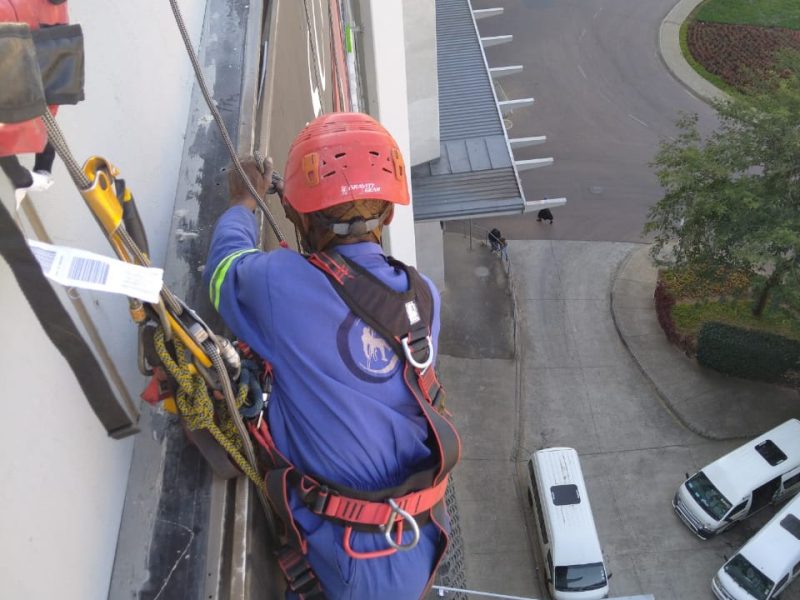
The High Cost of Keeping Johannesburg’s Skyline Standing Tall

Johannesburg’s skyline is growing, and with it comes the constant need for maintenance. Whether it’s fixing signage, cleaning glass, or testing anchors, the big question for property managers and contractors is: how do you reach the work area without blowing the budget?

For decades the answer was scaffolding. It’s familiar, it looks “solid,” and everyone knows how it works. But here’s the problem: scaffolding comes with hidden costs in time, permits, and disruption. Rope access has quietly become the smarter alternative, and the numbers prove it.

Want to cut costs on your next project?

rope access FOCHINI high-rise infrastructure installation

See why rope access is cheaper against scaffolding costs: 

Hidden Costs

Why Scaffolding Costs More Than You Think

When you approve scaffolding, you aren’t just paying for workers and steel pipes. You’re paying for:

Hidden Cost Alert

Scaffolding can take 3–10 days to erect. Rope access setup? Less than an hour.

On a 20-story building in central Johannesburg, scaffolding setup alone can reach R1 million +, long before a single repair is made.

Efficiency

Rope Access Delivers Real Cost Savings

The MHT Group’s case studies make it clear: rope access isn’t just cheaper; it’s dramatically cheaper.

Site #1 (Process Plant Tower):

  • Rope Access: 32 days, 65% less cost.
  • Scaffolding: 75 days, full budget.
  • Site #2 (Tower & Overhead Line):

  • Rope Access: 7 days, 45% less cost.
  • Scaffolding: 21 days, nearly double the price.
  • What do these numbers mean for property managers? Faster turnarounds, smaller teams, less public disruption, and tens of thousands saved per project.

    Hidden Costs

    Safety: The Myth vs The Reality

    A common misconception is that rope access is risky. In truth, rope access has the lowest incident rate in the entire work-at-height industry. Why?

    Scaffolding accidents (falls, collapses, tip-overs) remain one of the top causes of workplace injuries worldwide. Rope access eliminates the bulk of that risk by cutting out the bulky structures altogether.

    Book a safety compliance appointment for your property today.

    Low Impact

    Less Disruption for Tenants and the Public

    Johannesburg’s high-rises aren’t just office blocks – they’re shopping centres, banks, and residential towers. When you choose scaffolding, you’re inconveniencing everyone who uses the building. Blocked entrances, noisy assembly, and road closures drive tenants crazy.

    Rope access skips the drama. Crews arrive, rig ropes from the roof, and get to work. By the time scaffolding would even be halfway up, rope access technicians are already ticking off completed tasks.

    Scaffolding

    When Scaffolding Still Has a Role

    To be clear, scaffolding isn’t obsolete. For very long-term projects with heavy equipment and large crews, scaffolding still has advantages. But for inspections, maintenance, cleaning, signage, and short-to-medium repair jobs, rope access is the smarter choice. Think of it this way: scaffolding is like buying a truck to deliver one box. Rope access is a courier on a motorbike — lighter, faster, and far cheaper.

    Contact 360 Rope Access today — cut costs, not corners

    Discover

    See Professional Rope Access

    Savings

    Cutting Costs Without Cutting Corners

    In a city like Johannesburg, where property budgets are tight and tenant expectations are high, rope access offers a way to save money without sacrificing safety or quality. The method is already trusted worldwide for oil rigs, bridges, and skyscrapers — and it’s transforming high-rise maintenance right here at home. For property owners and facility managers, the decision comes down to this: Why pay more and wait longer when rope access delivers the same job at a fraction of the cost?

    Request A Quote